Accompanists’ thoughts on Music Season
Unlike vocalists and solo instrumentalists who can preplan what to present, for accompanying musicians, each concert is a mystery unraveled only as it unwinds. In music season, they can play 2-3 concerts daily, switching gears from musician to musician as seamlessly as changing talam between songs.
This article appeared online in The Hindu newspaper on November 28th 2025 and in print on December 1st, 2025.
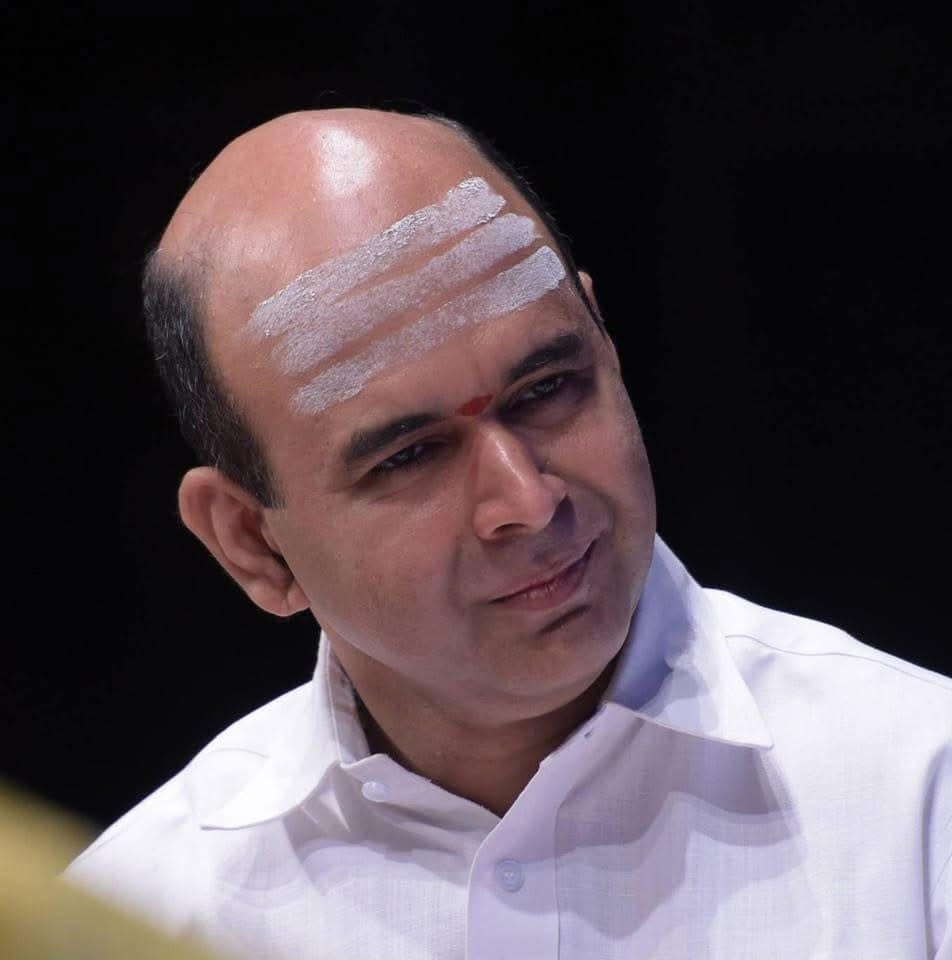
Photo courtesy: Sri. Hariharan Sankaran
“Adapting to different musicians becomes completely instinctive,” says mridangist N. Manoj Siva who has played in every season since 1987. The same sentiment is echoed by kanjira exponent K.V. Gopalakrishnan (first season 1994), ghatam artiste N. Guruprasad (first season 1998), violinist L. Ramakrishnan (first season 2004), mridangist N.C. Bharadwaj (first season 2004 with Ramjhi’s Isai Mazhalai) and violinist Vittal Rangan (first season 2011), who all say they play for the music they hear each moment.
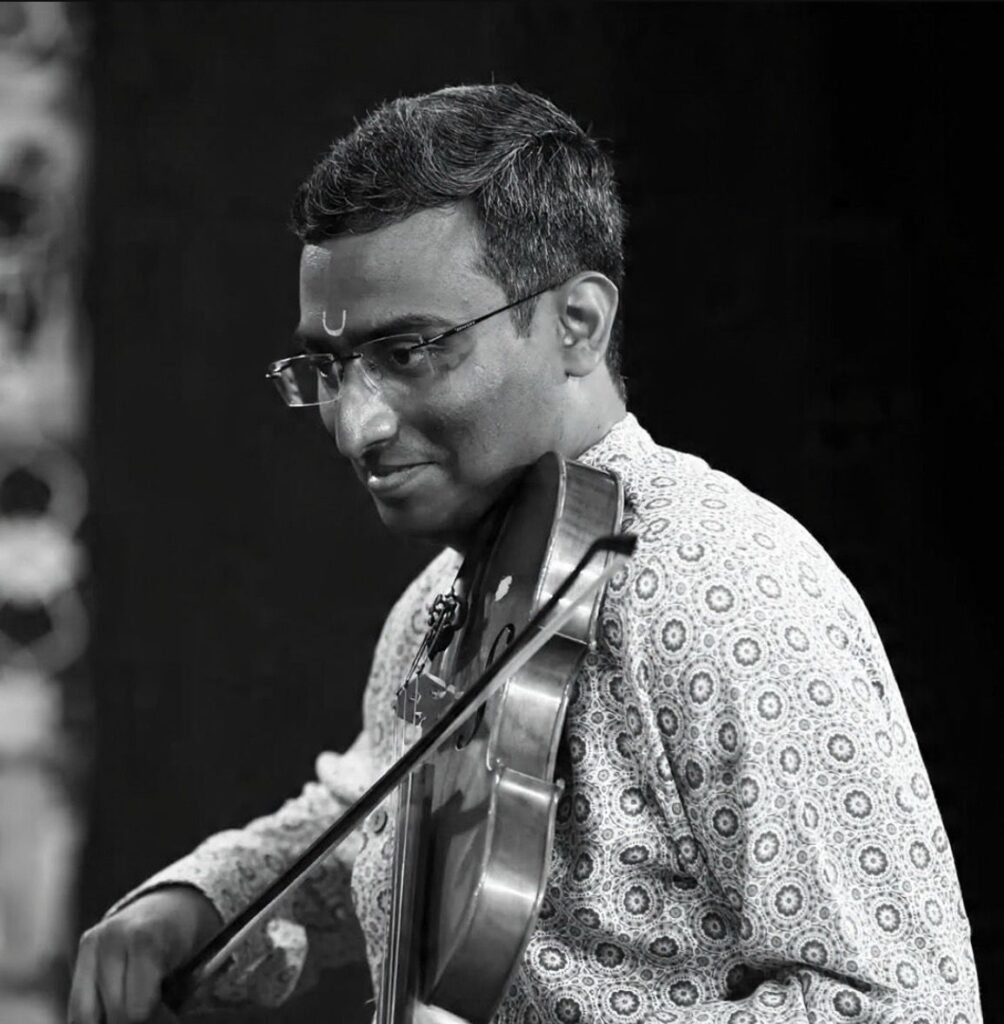
Photo courtesy: Sri. Rajappane Raju
What are their thoughts on the season and its evolution over their careers? Ramakrishnan and Vittal remark on many more thematic presentations now. They say it keeps them on their toes with unique repertoire including rehearsals and professional filming. Bharadwaj feels both experimentation and number of concerts have increased. Manoj states, “In earlier days, season and off-season concerts were not dissimilar. Now, there is an expectation that artistes present something different in season. Previously, some sabha secretaries took initiative to make untried concert teams in season based on what they thought would click. That does not seem to happen now,” adding “Variety and complexity presented in pallavi-s is much more now than before.” Recordings of pallavi-s are often sent to percussionists and, sometimes, to violinists. Sometimes, online practice sessions and, less frequently, in-person rehearsals, have to be accommodated too.
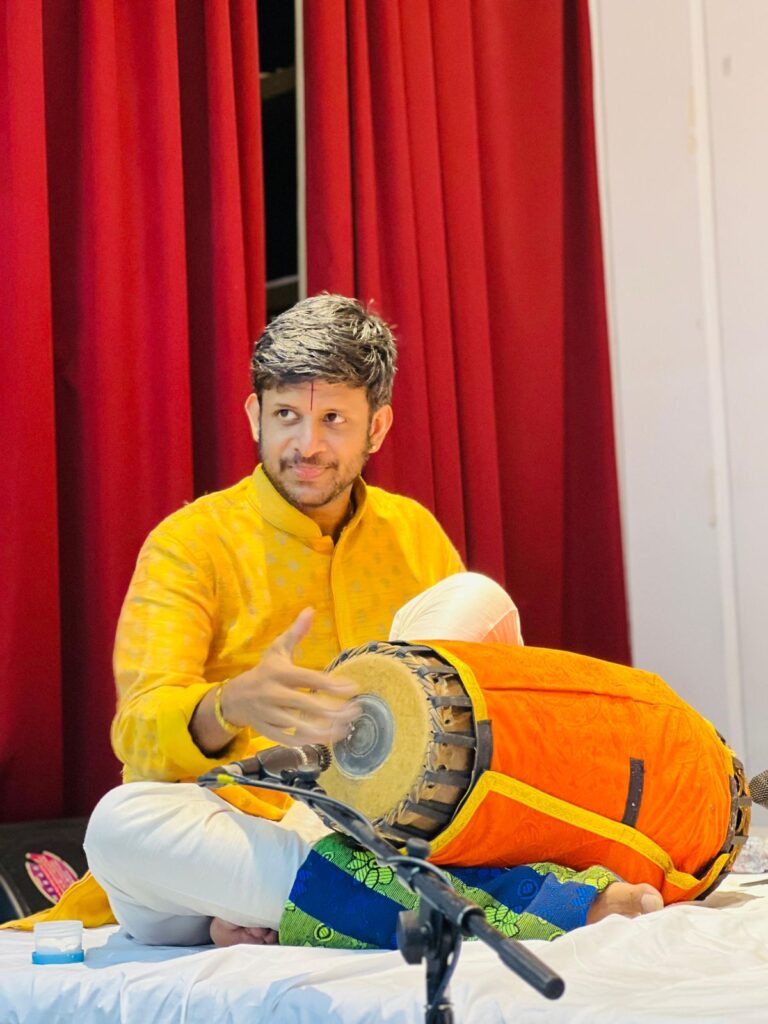
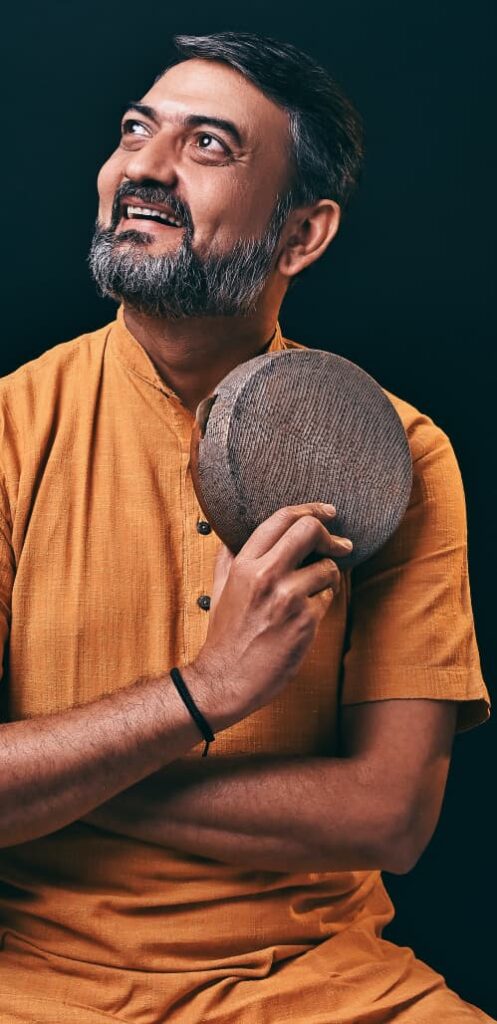
“Newer contact microphones mean ghatam players need less force to play. Before, our fingers would be badly bruised after concerts, especially during season,” says Guruprasad who observes there were many more textures to the music when he first began performing. He likes the newer artiste seating configuration that gives second percussionists unobstructed view of all performers and the audience too.
Whom musicians feature alongside and how often they perform in season are critical yardsticks of recognition and popularity. Season visibility translates to more students which provides predictable income. Some accompanying artistes also conduct independent workshops of their own while on overseas tours with a team.
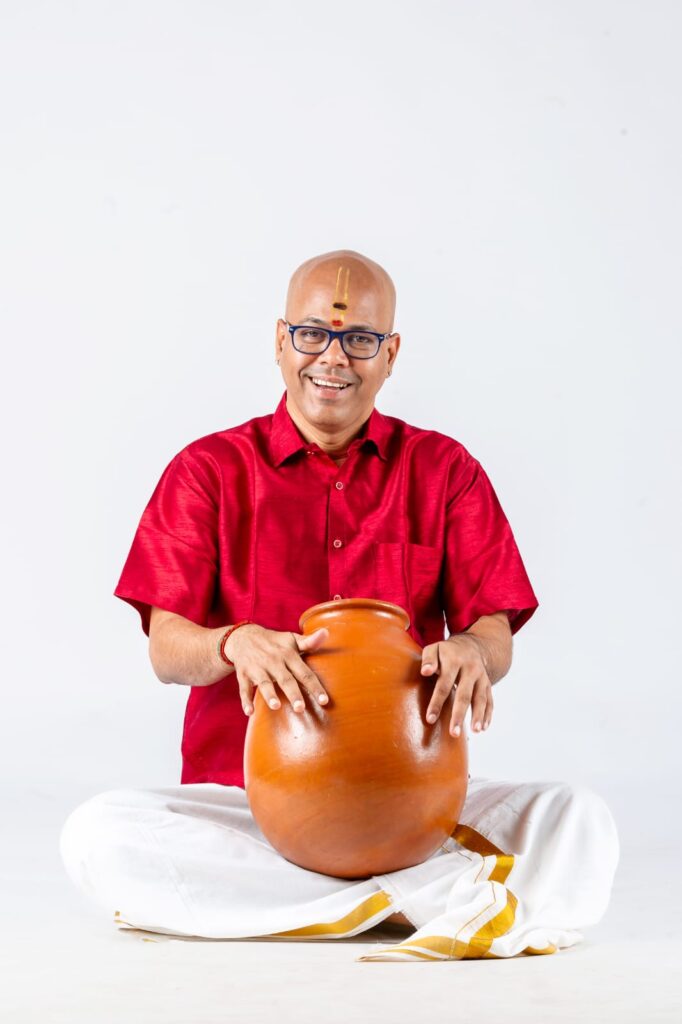
Photo courtesy: Sri. Sabari
The number of attendees in the 15-30 age range has increased significantly now, say Vittal and Bharadwaj. The latter thinks the proliferation of social media has enticed younger crowds to experience the season in person. All say overseas visitors are significantly more now than before. Guruprasad states, “The season is when we get to play with the senior-most mridangist-s who mostly perform only then.” Gopalakrishnan, who initially played mridangam before switching entirely to the kanjira in 2002, adds, “Many people residing abroad come to perform during season.” Indeed, aspirants in other countries see performing in Chennai during season as an important rite-of-passage. “When musicians request organisers abroad for kanjira/ghatam for overseas tours, organisers’ main question is whether that musician has performed during season,” Gopalakrishnan says. Guruprasad notes that many organisers also come at that time, highlighting the vital networking opportunity that seasons are.
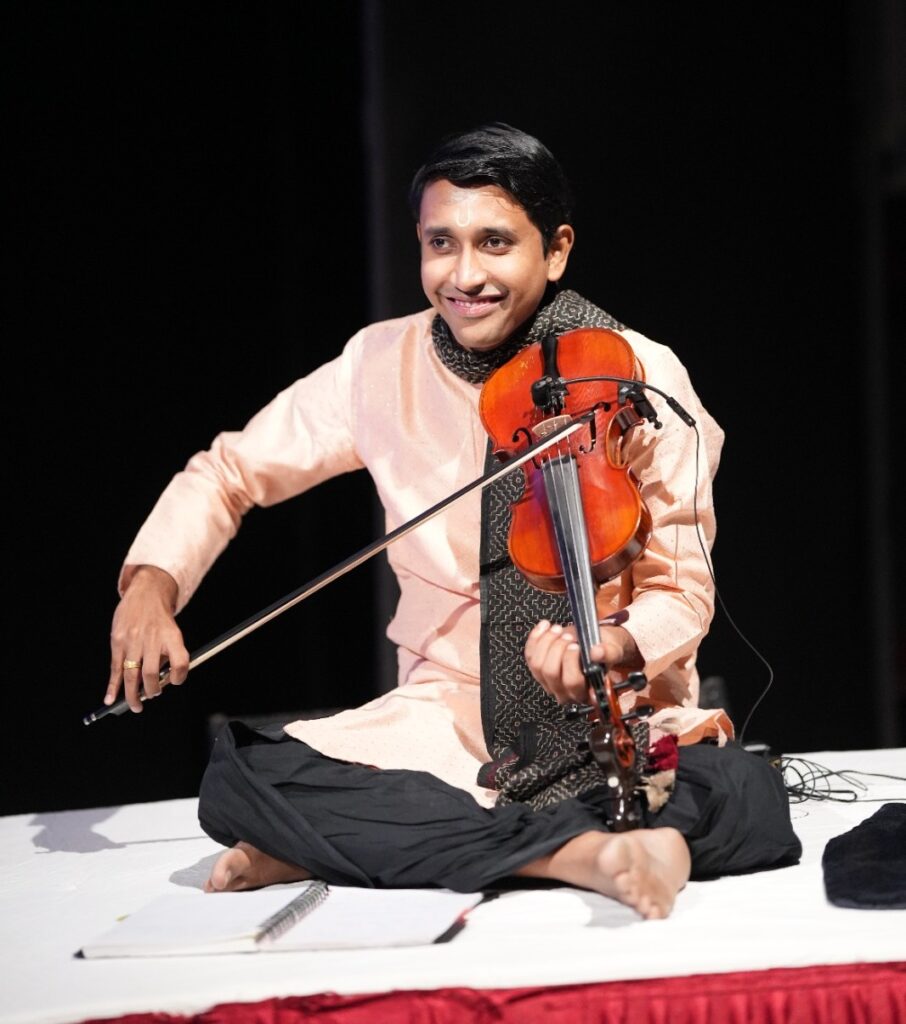
Photo courtesy: Ms. Anagha Nadig
Once artistes have firmly established themselves, many reduce number of concerts slightly. For the past few years, Manoj, for example, does not play immediately consecutive concerts. Whereas Gopalakrishnan played 87 concerts in the 2008 season, including 5 on a single day, now, he never exceeds three a day. Metro-related traffic congestion has also factored in artistes’ recent decisions.
Given the volume of concerts, instrument performance is on every instrumentalist’s mind. “I go to the luthier many times during season”, says Vittal who, like Ramakrishnan, uses three violins for different bands of sruti-s. Manoj and Bharadwaj carefully prepare many mridangams before season begins. Guruprasad keeps numerous ghatams on hand. “Since the advent of phone based tanpura-s, musicians use extremely precise sruti-s such as G minus 40 or C plus 25 making it more time consuming to select the ghatam.” While a ghatam’s sruti can be lowered slightly, it can never be raised, and vocalists request sruti changes even after being ensconced on stage. Gopalakrishnan lays out 4 kanjira-s for every concert with 2 more in reserve. “I have used all 6 many times,” he says. Kanjira-s do not have sruti but require sprinkling of water to produce tone. As it is played, the skin can lose tautness. At day’s end, he uses a hair dryer to dry the instruments.
Ramakrishnan highlights an issue affecting accompanying artistes specifically. While concert durations are similar across comparable slots, start times can be slightly different from sabha to sabha. This makes it stressful for accompanying artistes with consecutive concerts in different sabha-s. A quick glance reveals start times for the first evening slot of 16.00, 16.30 and 16.45 and second slots starting at 18.00, 18.30, 18.45 and even 19.00. While musicians aim for sufficient buffer, they cannot always do so, having to intricately manage accepting concerts requested by musicians senior to them, playing alongside those whom they regularly perform with etc. Between being in great demand themselves and the many soloists and fellow accompanists they try to accommodate, it becomes a veritable airline scheduling problem. Delayed starts and ends at concerts also cascade, leaving these artistes further in the lurch. “Standardising timings across sabha-s during season would be incredibly helpful for all of us,” Ramakrishnan pleads.
Amidst all this, attending concerts and lecdems, tete-a-tetes with fellow musicians and eating and socialising at canteens make the season distinctive and memorable for the performers.
